To drill into brick without cracking it, use a masonry bit in a hammer or rotary hammer drill, start slowly at low speed to score a shallow pilot, then apply steady light pressure and let the tool do the work. Keep the bit square to the wall, drill into the solid brick face for a strong fixing, and clear dust often. That patient approach is the whole secret to how to drill into brick cleanly.
Why does brick crack when you drill it?
Brick is hard but brittle, so it fails when you push too fast, wander off angle or use the wrong bit. Heat and pressure build at the tip, and instead of grinding a neat hole the brick spalls, chips or splits.
Old and reclaimed bricks are the most fragile, along with anything near an edge or corner. If a fixing sits within about 50mm of a brick edge, aim for the mortar joint or shift your mark, because thin material has nothing to brace against.
The good news is that every one of these causes is avoidable. Get the bit, the drill setting and your technique right and clean holes become the norm rather than luck.
What you'll need
Masonry work is far easier with the correct kit on the bench before you start. Here is the short list for a typical fixing job:
- A hammer drill or rotary hammer from a good range of power tools — a plain drill will struggle in dense brick.
- Masonry drill bits with a carbide tip, sized to your wall plug. A tidy set of drill bits and cutting accessories saves you swapping brands mid-job.
- Wall plugs and screws matched to the load you're hanging.
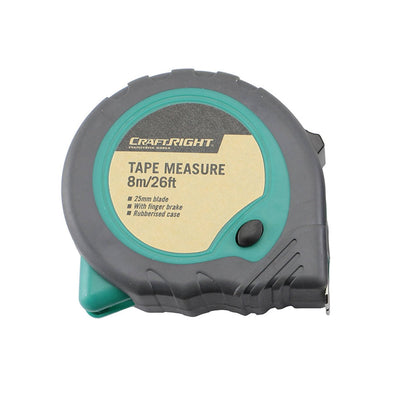
- A pencil, tape measure and spirit level for accurate marking.
- Safety glasses, a dust mask and gloves — brick dust is sharp and gets everywhere.
- A vacuum or brush to clear the hole, plus good task lighting such as the Infinity X1 7000 lumen rechargeable flashlight when you're working in a dim corner or garage.
If your job also means cutting a clean recess for a downlight or vent, a purpose-made cutter like the Craftright 5 piece carbon steel holesaw set handles plaster cutouts, while your masonry bits stay dedicated to the brickwork.
Should you drill the brick or the mortar?
For most solid fixings, drill into the face of the brick. Brick holds a wall plug more firmly and resists pull-out better than the softer mortar joint between courses.
Mortar is the better target only in two cases: when the fixing is very close to a brick edge, or when you may want to remove it later and hide the hole in the joint. Mortar is easier to drill and easier to repoint afterwards.
Whatever you choose, mark the spot with a pencil cross and check it with a level. A minute spent marking accurately prevents a wonky shelf and a second, weakening hole beside the first.
How to drill into brick step by step
Work through these steps in order and don't rush the first two — that's where cracks are won or lost.
1. Set up the drill
Fit the right-sized masonry bit and push it fully into the chuck. If your drill has a hammer switch, leave it off for now; if it has a clutch or speed dial, start on the lowest setting.
2. Score a pilot dimple
Hold the bit square to the wall and squeeze the trigger gently to make a shallow starter mark. This stops the tip skating across the brick and keeps the hole exactly on your pencil cross.
3. Switch to hammer and build depth
Once the tip is seated, engage the hammer action and increase to a moderate speed. Let the drill's percussion break up the brick — your job is to guide it, not force it.
4. Use light, steady pressure
Push just hard enough to keep the bit cutting. If dust stops flowing or the motor bogs down, ease off. Excess force is the single biggest cause of a cracked brick.
5. Clear dust as you go
Every 10 to 15mm, pull the spinning bit part-way out to flush dust from the hole. A clogged hole overheats the tip and packs debris that stops your plug seating.
6. Drill to depth and finish
Wrap a strip of tape around the bit at the depth you need, then stop when the tape reaches the surface. Vacuum the hole, tap in the wall plug flush, and drive your screw.
How deep and how fast should you drill?
Match the hole depth to your wall plug plus a few millimetres of clearance, so the plug sits flush and any dust falls to the bottom rather than pushing the plug out. The tape-marker trick makes this foolproof.
Speed matters just as much. Dense modern bricks like a moderate speed with firm hammer action, while soft or old bricks prefer a slower speed and a lighter touch. When in doubt, go slower — you can always speed up, but you can't un-crack a brick.
Keep the drill level and pull straight back out when you're done, without levering the bit sideways, which can chip the hole edge.
Common mistakes to avoid
Most brick-drilling disasters come from a handful of repeat offenders. Watch for these:
- Using a wood or metal bit — without a carbide tip it will overheat, blunt fast and burn the brick rather than cut it.
- Skipping the pilot dimple so the bit wanders and cracks the surface.
- Leaning on the drill instead of letting the hammer action work.
- Drilling too close to an edge where the brick has nothing to support it.
- Never clearing dust, which overheats the bit and stops plugs seating.
- Forgetting eye and lung protection — flying chips and silica dust are a real hazard.
Prop the door open with something soft like the Adoored black timber door wedge so you can move tools in and out without knocking your setup or trailing the drill lead across a doorway.
When should you call a professional?
Most shelf, cabinet and fixture jobs are well within reach of a confident DIYer. But bring in a trade for a few situations where a mistake is costly or dangerous.
Call a licensed electrician or plumber before drilling where cables or pipes may run, especially around switches, taps and meter boxes. Use a cable and pipe detector first, and stop if you're unsure what's behind the wall.
Heavy loads such as wall-mounted TVs, water heaters or awnings, and any work on a heritage or double-brick structural wall, are worth a builder's eye. A professional will confirm the right fixing and depth so nothing pulls loose down the track.
Frequently asked questions
Can I drill into brick with a regular drill?
You can start a small hole in soft brick with a standard drill and a masonry bit, but it's slow and hard on the motor. For dense modern brick, a hammer drill or rotary hammer is far better because the percussion breaks up the material for you, giving a cleaner hole with less pressure and less risk of cracking.
What size drill bit do I need for a wall plug?
Match the masonry bit to the number stamped on the wall plug. Most plugs list their required drill diameter, commonly 6mm, 7mm or 8mm. Using the correct size means the plug fits snugly without being forced; too large and it spins loose, too small and you risk splitting the brick as you push it in.
Should I drill the brick or the mortar joint?
Drill the solid brick face for the strongest fixing, as brick grips a wall plug better than softer mortar. Only choose the mortar joint when the fixing sits very close to a brick edge, or when you'll want to remove it later and hide the hole, since mortar is easier to drill and repoint afterwards.
Why does my drill bit keep slipping on the brick?
Slipping usually means the bit is skating before it bites. Score a shallow pilot dimple first at low speed with the hammer action off, holding the drill square to the wall. A blunt or wrong-type bit also slips, so use a sharp carbide-tipped masonry bit and let the tip seat before you build up speed.