To get your water feature pump size right, match the pump's flow rate (litres per hour) to your feature type, then check its maximum head height beats the vertical lift to your spout. As a rule of thumb, aim for around 1,000 L/h for a small fountain and 1,500-3,000 L/h for a decent cascade, allowing extra for pipe friction and height.
How do you size a water feature pump?
Sizing comes down to three numbers: flow rate, head height and power draw. Get the first two right and the pump will move enough water to the top of your feature without straining. Power draw just tells you the running cost and the cable you'll need.
Everything else, like fittings and hose diameter, follows from those figures. Work through them in order and you'll avoid the two classic mistakes: a trickle that looks sad, or a torrent that splashes over the edge and drains the reservoir.
What you'll need before you start
A little prep saves a return trip. Gather your measurements and tools first, then match the pump to the job.
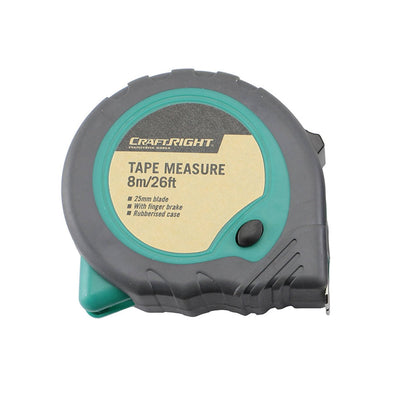
- A tape measure and a bucket with known volume (for timing flow).
- The height from the water surface to the highest outlet, in metres.
- Your hose or tube internal diameter (commonly 13mm, 19mm or 25mm).
- A weatherproof outdoor power point or RCD-protected lead.
- Optional planting and finishing touches from our garden and outdoor range to dress the surrounds once the water's flowing.
If you're building the feature into a productive patch, a healthy soil life helps the plants around it thrive. A carton of live composting worms worked into nearby beds keeps the surrounding greenery lush.
Step 1: Work out your flow rate (litres per hour)
Flow rate, measured in litres per hour (L/h), decides how the water behaves. Too little and a cascade weeps; too much and a bubbling urn turns into a geyser. Start with the feature type.
Match flow to the feature type
- Small bubbler or urn: 200-600 L/h for a gentle, calming flow.
- Single-spout fountain: 600-1,200 L/h for a clear, steady jet.
- Spillway or wall feature: around 1,500 L/h per 30cm of spillway width.
- Multi-tier cascade or stream: 2,000-3,000 L/h to keep every level running.
The spillway width formula
For any feature where water sheets over a lip, use roughly 1,500 L/h for every 30cm of lip width for a full, even curtain. A 60cm spillway therefore wants about 3,000 L/h. Drop to 750 L/h per 30cm if you prefer a thin, quiet film.
Step 2: Measure head height and pipe losses
Head height is the vertical distance the pump must lift water, measured from the water surface to the top outlet. Every pump lists a maximum head, and its flow drops sharply as it nears that limit, so never buy a pump whose max head just scrapes past your lift.
Add friction loss to your height
Pipe and fittings rob some performance, called friction loss. As a simple allowance, add the equivalent of 0.3m of extra head for every 1m of horizontal hose run, and a little more for tight bends or narrow tube. Wider hose (25mm over 13mm) cuts this loss noticeably on longer runs.
Read the flow curve, not just the headline number
Manufacturers publish a flow curve showing L/h at each height. Find your total head (lift plus friction allowance) on that curve and read across to the actual flow. That figure, not the maximum-flow number on the box, is what you'll really get.
Step 3: Check the power draw and running cost
Pond and fountain pumps are rated in watts. A small fountain pump might draw 20-40W, while a big cascade pump can pull 100W or more. Since most features run for long stretches, efficiency matters more than peak grunt.
Look for a pump with a good flow-per-watt ratio and a solar option if the feature sits away from power. Always run outdoor pumps through an RCD (safety switch) and use only cable rated for outdoor and submersible use.
Step 4: Match the reservoir and hose
Your reservoir should hold enough water that the pump never runs dry as it circulates. A good starting point is a reservoir volume at least equal to the pump's hourly flow, so a 2,000 L/h pump wants a reservoir of roughly 2,000 litres of capacity or a well-topped-up sump.
Match hose internal diameter to the pump's outlet; don't neck it down. A restrictive fitting throttles flow and makes the pump work harder for less show.
Common mistakes when sizing a pump
- Ignoring head height: buying on flow alone, then wondering why the fountain barely dribbles at the top.
- Forgetting friction loss: a long, narrow hose can swallow a third of your flow.
- Oversizing badly: a monster pump splashes water out of the basin and empties the reservoir.
- Undersized reservoir: the pump sucks air, cavitates and burns out early.
- Skipping the RCD: water and mains power demand a safety switch, every time.
When to call a professional
Submersible low-voltage pumps are firmly DIY territory. But bring in a licensed electrician for any new outdoor power point, hard-wiring, or mains work near water. In Australia, fixed wiring must be done by a licensed pro, and it's your safety on the line.
A landscaper or pond specialist is worth it for large formal ponds, structural retaining, or features with fish, where flow, filtration and turnover all interact. Once the water's sorted, planting up the edges with something easy like fast-growing leafy greens from seed softens the hard edges and earns the space its keep. Explore more planting ideas across our wider garden selection.
Frequently asked questions
What size pump do I need for a small garden fountain?
For a small single-spout or bubbling fountain, a pump rated around 600-1,200 litres per hour is usually ample. Check that its maximum head height comfortably exceeds the lift to your spout, then use the flow curve to confirm real output at that height. Fit a flow control valve so you can fine-tune the jet.
How do I calculate head height for a water feature?
Measure the vertical distance from the water surface up to the highest outlet in metres, then add a friction allowance of roughly 0.3m for every 1m of horizontal hose. That combined figure is your total head. Read your target flow off the pump's flow curve at that head, not off the headline maximum flow.
Can a water feature pump run continuously?
Yes, most quality submersible pond and fountain pumps are built for continuous running, which also helps keep the water aerated and clear. Keep the reservoir topped up so the pump never runs dry, clean the intake filter regularly, and switch it off before it can freeze in a cold snap to avoid damage.
Is a bigger water feature pump always better?
No. An oversized pump can splash water clean out of the basin, drain the reservoir and waste power. The goal is to match flow to your feature type and head height, not to overpower it. Choosing a pump with a flow control valve gives you headroom while still letting you dial the water back to a natural-looking level.